Nearshore Extreme Events Reconnaissance (NEER)

The goal of NEER is to conduct rapid, pre-storm site characterization, and instrument deployments by interdisciplinary teams to collect perishable data needed to address key hypotheses about storm impacts on coastal areas, including interactions and feedbacks between the natural and built environments and human actions and reactions.

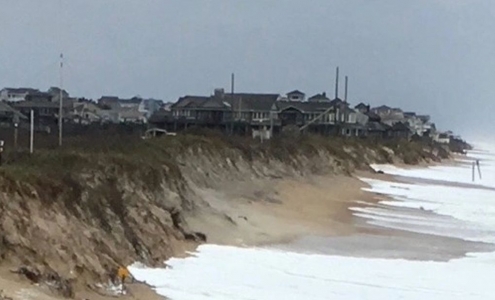
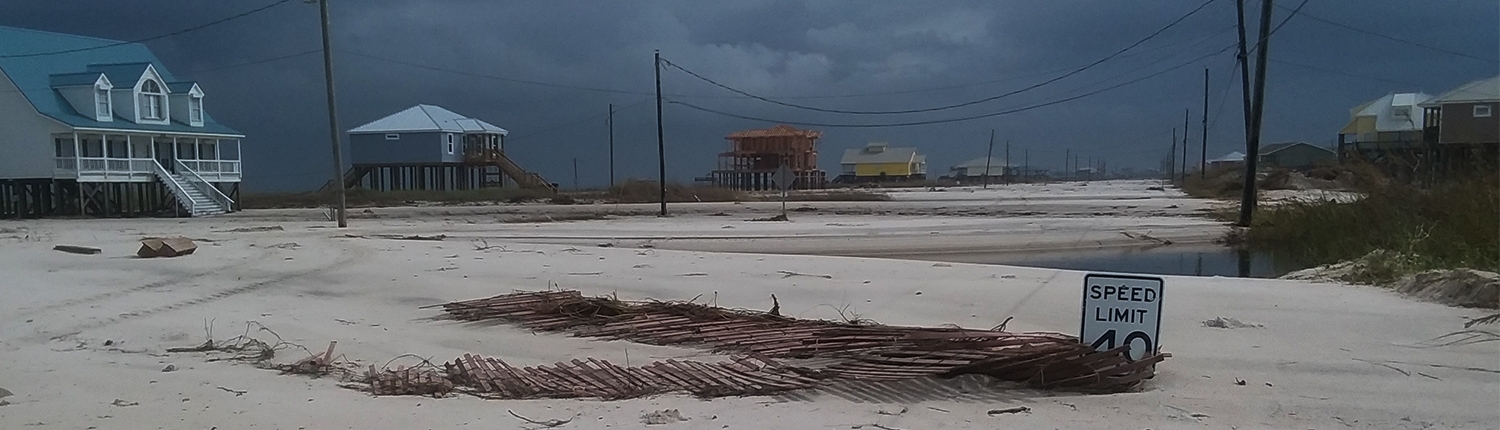
Extreme storms have significant impacts on the nearshore water-land interface (where ocean, sound, and estuary processes interact with the nearby land) that pose high risk to society. Collecting perishable observations before, during, and immediately following major storms will improve understanding and modeling of the interactions and two-way coupled feedbacks between natural-system processes (meteorology, oceanography, geomorphology, hydrogeology, geotechnology, ecology, biology), the built environment, and people’s responses and actions.
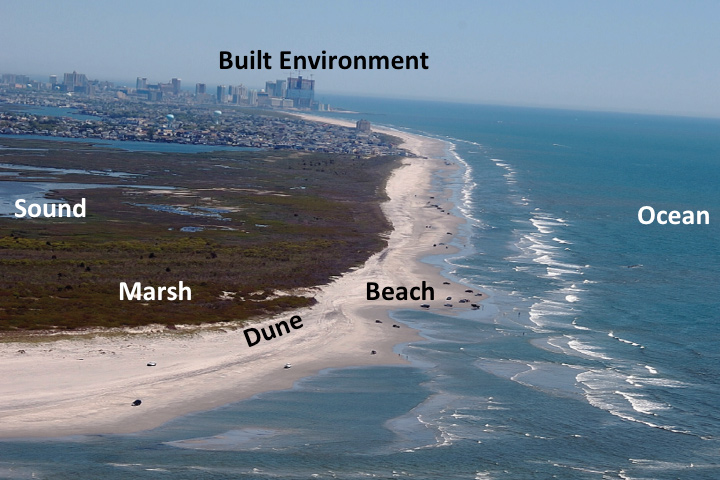
Aerial photo of the nearshore water-land interface near Atlantic City, NJ showing the range of coastal environments affected by extreme storms, including the nearshore ocean, beaches, dunes, marshes, sounds, infrastructure, and communities.
Aerial photo of the nearshore water-land interface near Atlantic City, NJ showing the range of coastal environments affected by extreme storms, including the nearshore ocean, beaches, dunes, marshes, sounds, infrastructure, and communities.
Event Responses

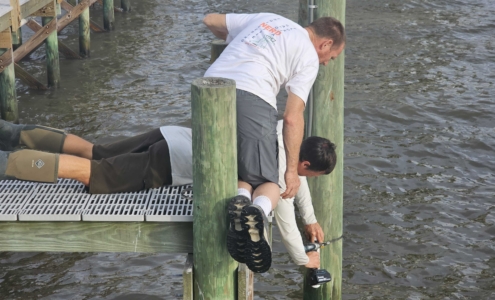
UF deploying a wave gage prior to Hurricane helene

Hurricanes Helene and Milton 2024

A Field Team led by Nina Stark (U. Florida) deployed 17 wave and pore pressure gages and collected surveys prior to Helene in Cedar Key, Suwannee, Shired Island, and Horseshoe Beach, FL with equipment and support from the NHERI Rapid Facility prior to Hurricane Helene.

East Coast Winter Storm January 2022 (Kenan)

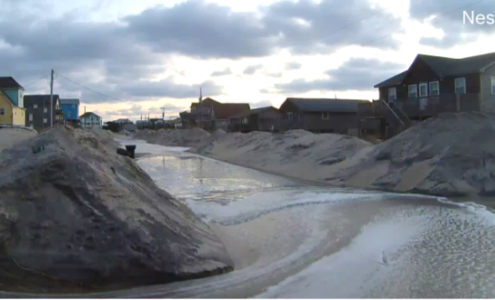
A Field Team (led by Ryan Mieras and students Ashley Holsclaw, Tanner Allen Jernigan, Anna B. Miller, and Katherine Boot) conducted a NEER response for the storm the Weather Channel dubbed Winter Storm Kenan.

Hurricane Ida

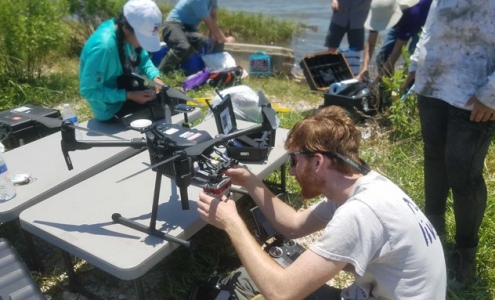
NEER supported a Field Team (led by Navid Jafari (LSU), with deployment assistance by Forrest Masters (UF) and Kirby Herbert (LSU)) to deploy 8 wave gages around the levees at Golden Meadows, LA.

Hurricane Laura

NEER is supporting a Field Team (led by Navid Jarafi and Jack Cadigan, LSU, and Jim Chen, Northeastern U.) and Home Team (Britt Raubenheimer, WHOI, and Chris O'Conner, UNC-Wilmington) to investigate the impacts of waves, surge, rain, and wind from Hurricane Laura on coastal Louisiana.

Tropical Storm Cristobal

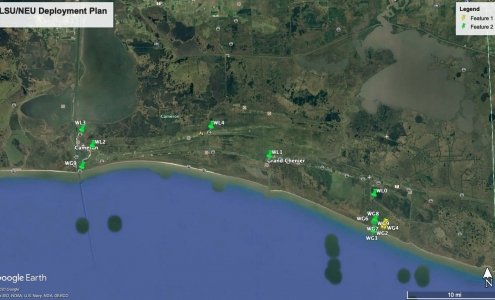
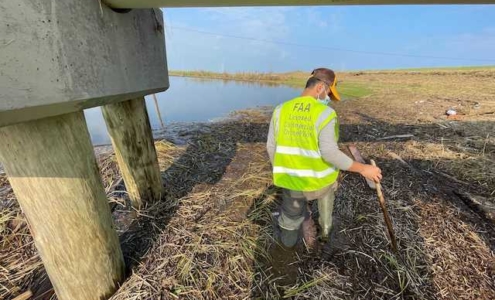
A NEER-supported Field Team (led by Navid Jafari, LSU) and Home Team (led by Jim Chen, Northeastern U.) deployed instruments and conducted site characterization before and after the storm to investigate the interactions and feedbacks among hydrodynamics, geotechnical properties of the coastal marsh system, and vegetation.
Tropical Storm Imelda

Tropical Storm Imelda

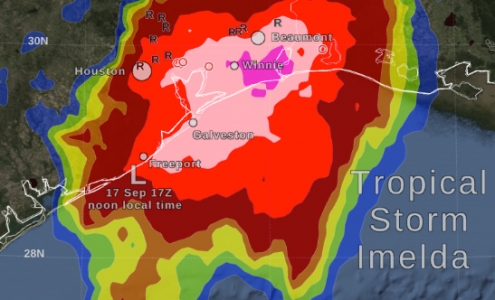
NEER decided not to deploy during Tropical Storm Imelda, which dropped over 40” of rain on the Galveston-Houston area. The storm developed too rapidly to deploy prior to the event. NEER members from University of Houston and Texas A&M and staff from the USGS Storm Events Group collected measurements of fecal indicator bacteria, water quality, and flow rates.
Recent News

NEER webinar

The NEER Steering Committee conducted an informational webinar…
rs=w-1240,h-620,cg-true,m

DUNEX

NEER members may coordinate with academic and agency researchers and local managers participating in the During Nearshore Extreme Event Experiment being conducted in 2019 and 2020.
photo by Joe Wartmanphoto by Joe Wartman

Rapid Equipment Facility training week in Duck, NC

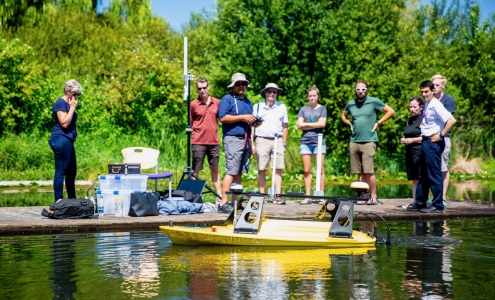
On October 7 - 11, RAPID is hosting a hands-on training and deployment opportunity at the U.S. Army’s Field Research Facility (FRF) in Duck, NC and at the more southerly experiment area on Pea Island NC.
© 2024 Nearshore Extreme Events Reconnaissance (NEER).